It is already three weeks ago that I was in Hamburg for this year’s International Computer Music Conference, which took place from 10-16 May 2026. Georg Hajdu, composer and director of the Ligeti Center, had invited me to give a keynote lecture at the renowned conference; I felt extremely honoured to share some of my work alongside absolute monsters in the field, such as Robert Henke (who co-created Ableton Live, which has been my favourite music software through years!), James Anderson Moorer, and Psyche Loui.
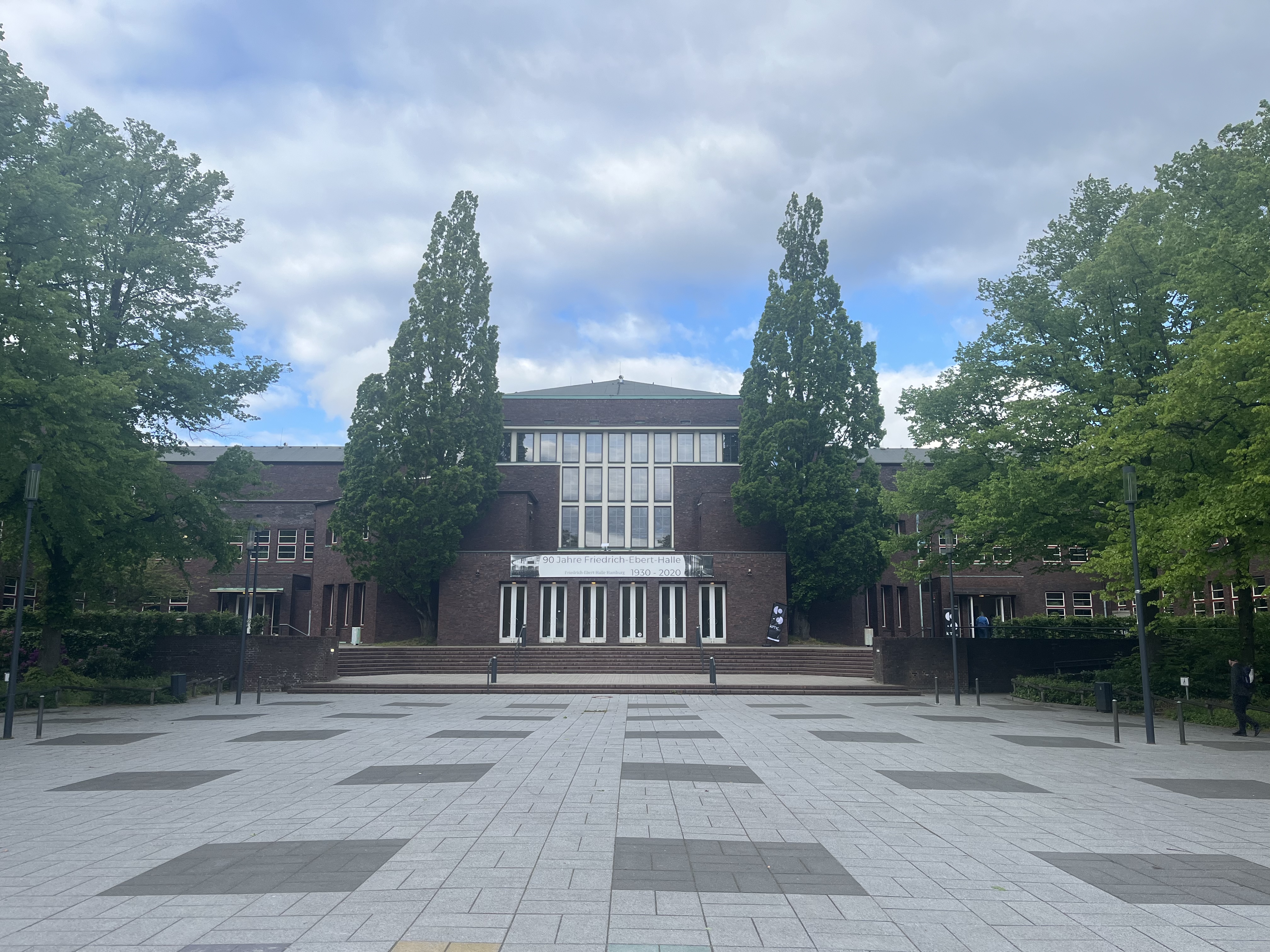
Most of the conference took place at the Technical University, next to concert venues such as the Friedrich-Ebert-Halle and the Ligeti Center itself. It was a great joy to immerse myself in a field I am definitely not an expert, and experience so much work on the cutting edge of computer music, in many forms of concerts, fixed media works, and installations.
The artist-researcher as connector in times of crises
In my keynote lecture, I reflected on the growing maturity of artistic research in the last 5–10 years, and its inherent transdisciplinary nature. The artist-researcher is a central persona in this field, that is typically characterised by hybridity and fluidity, taking part in several practices, contexts, and discourses — connecting all of these, both within and outside the arts.
At the same time, however, we live in a time characterised by multiple crises that don’t seem to end very soon, and leave the world in extreme continuous instability on a global scale. This includes late-stage neoliberalism and capitalism, climate change and questions of climate justice, rising fascism and multiple wars, to mention only the largest and most devastating examples.
While the arts can never literally “solve” any of these issues, artists have always related to the world and times they live in, in one way or another. And just as several scientists have taken more activist stances recently (Heinzen-Ziob 2026), artistic research arguably can take (more) responsibility to address social-societal issues, and explore what kinds of “shifts” might be suggested, provoked, proposed, speculated, or imagined.
On this background, I offered a few examples of such socially engaged artistic research projects, and discussed the persona of the artist-researcher as a “connector” and the methodological consequences such a positionality implies. From this perspective, I shared a series of questions to the field of computer music, to explore and discuss bridges and potential connections between topics of socially engaged artistic research and the disciplines and discourses of (research in and through) computer music.
I will publish the full-text version of the lecture here on my blog, within the next couple of weeks.


