Some time ago, I published a first post on our project “Towards Circular Communities”, a collaboration between our Fontys Academy of the Arts professorship Artistic Connective Practices and Next Nature, funded through the programme “Artistiek en Ontwerpend Onderzoek” (artistic and design-based research) from Nationaal Regieorgaan Praktijkgericht Onderzoek SIA and Stimuleringsfonds Creatieve Industrie. The central idea of the project is to imagine and speculate how we, as a society, can create a circular community — through artistic research.
The point of departure is the urgency to explore the urgent topic of circularity1, as a concept closely related to climate justice and sustainability, and inquire into ways to live on this planet in a more sustainable and climate-just way. We have chosen community as a central lens, which includes humans, animals, plants, and technology: An interspecies community of which artificial intelligence is a sustainable part.
During the two years of the project, we organise several “exchange moments”, public events that focus on one of the associated artists and to which we invite experts from the fields of circular economy, philosophy, artificial intelligence, or social design.
The first exchange moment
The first of these exchange moments took place on 22 April 2026, at the Next Nature Museum (Evoluon) in Eindhoven. The day was organised around the work of Matteo Marangoni, who shared some of his installation work, as well as a few listening and spatialisation exercises with us in the garden of the Evoluon.
Other presenters included composer and performer Jonathan Reus, professor of Moral Design Strategy Bart Wernaart, and musician Jonas Howden Sjøvaag (who is also one of the participating artists of the project).
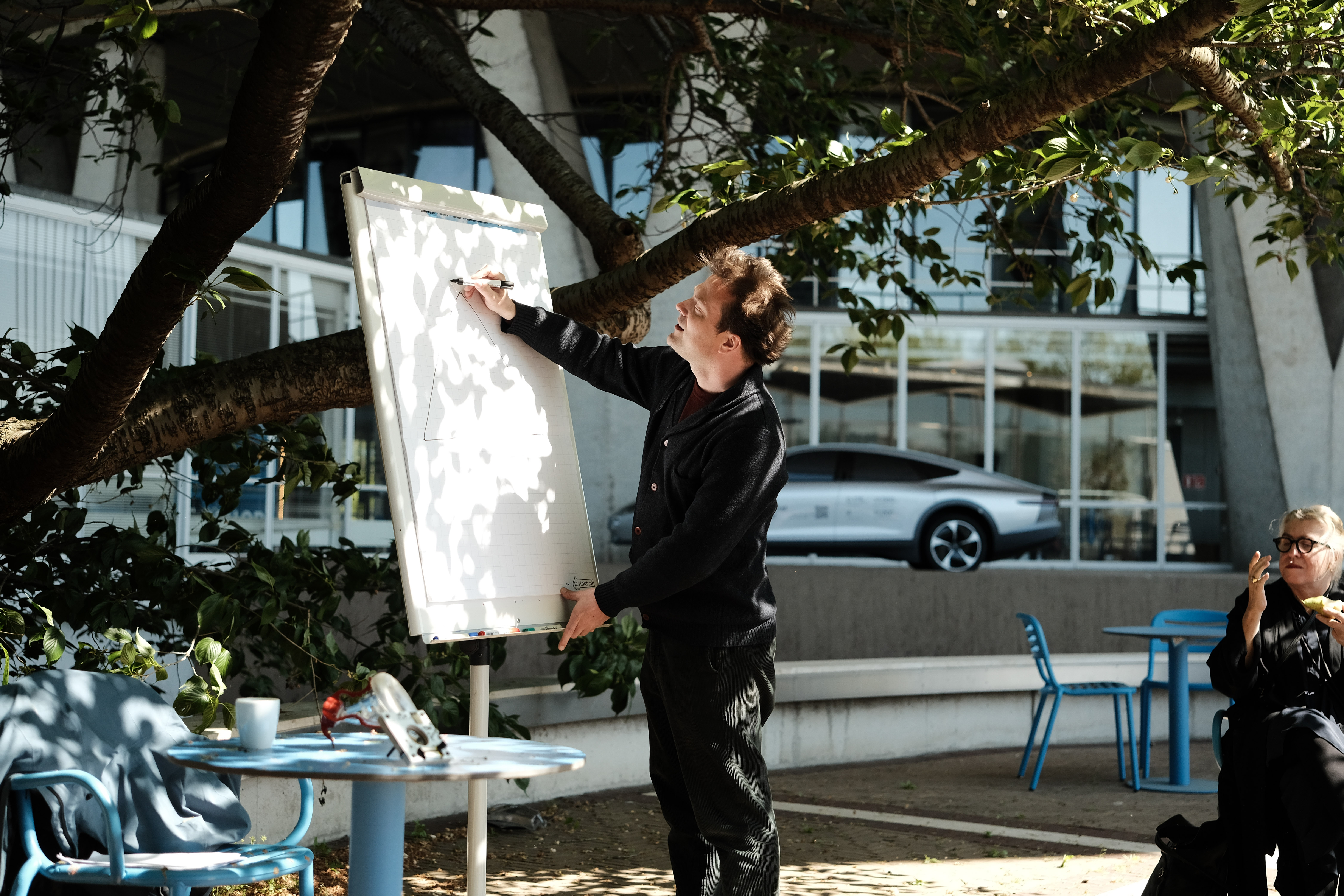
The day turned out to emphasise sound as a medium, and the relation to working with artificial (or swarm) intelligence. After the welcome and introduction, the morning started with Jonathan Reus, who presented his compositional, performance and research work on disembodied and displaced voices (through training AI models). I was particularly struck by an iteration of his work iː ɡoʊ weɪ, which used voice recordings from the social media stream concerning the war in Gaza, and worked for him as a means to process these voices and bring attention to them.
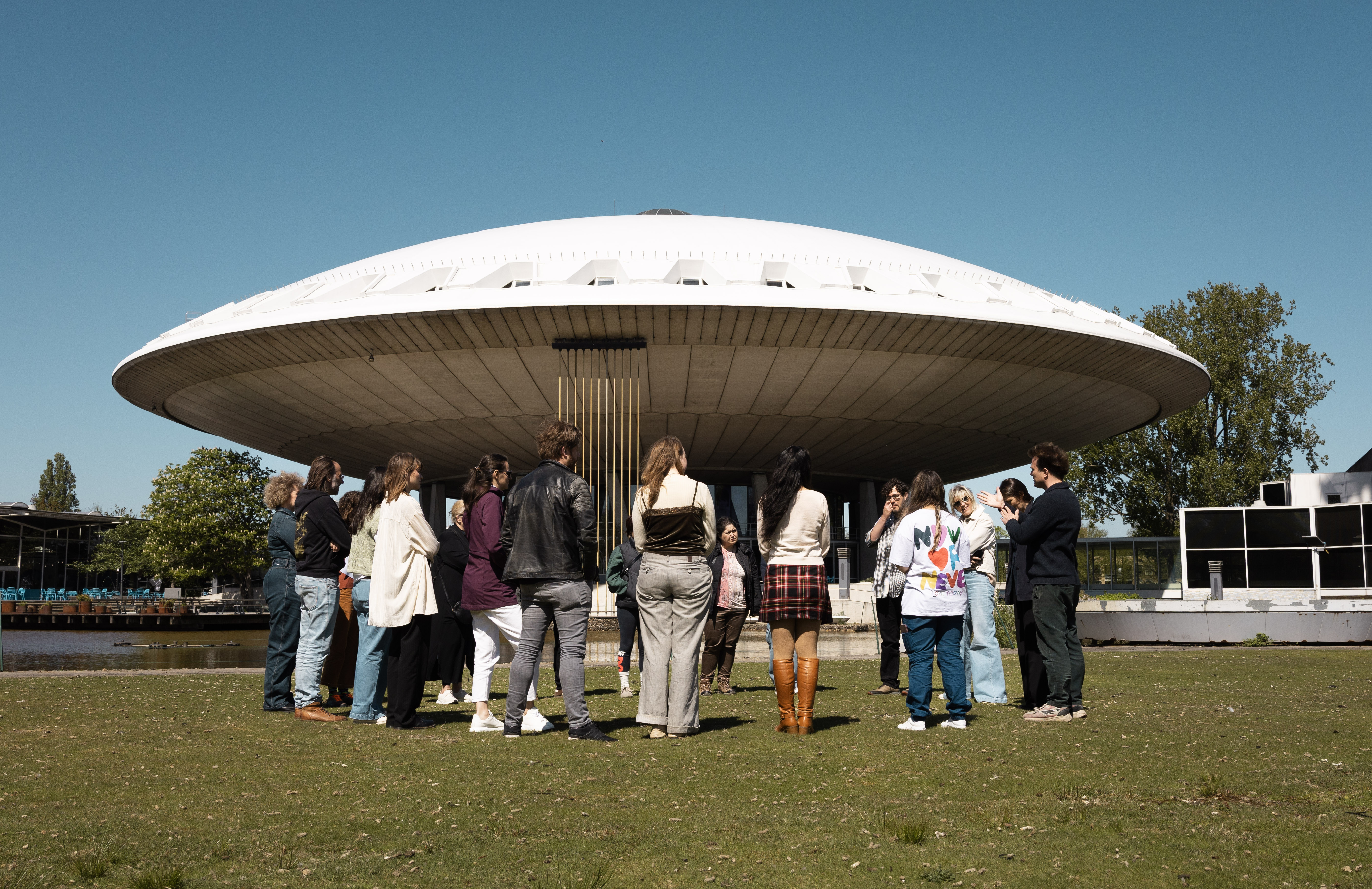
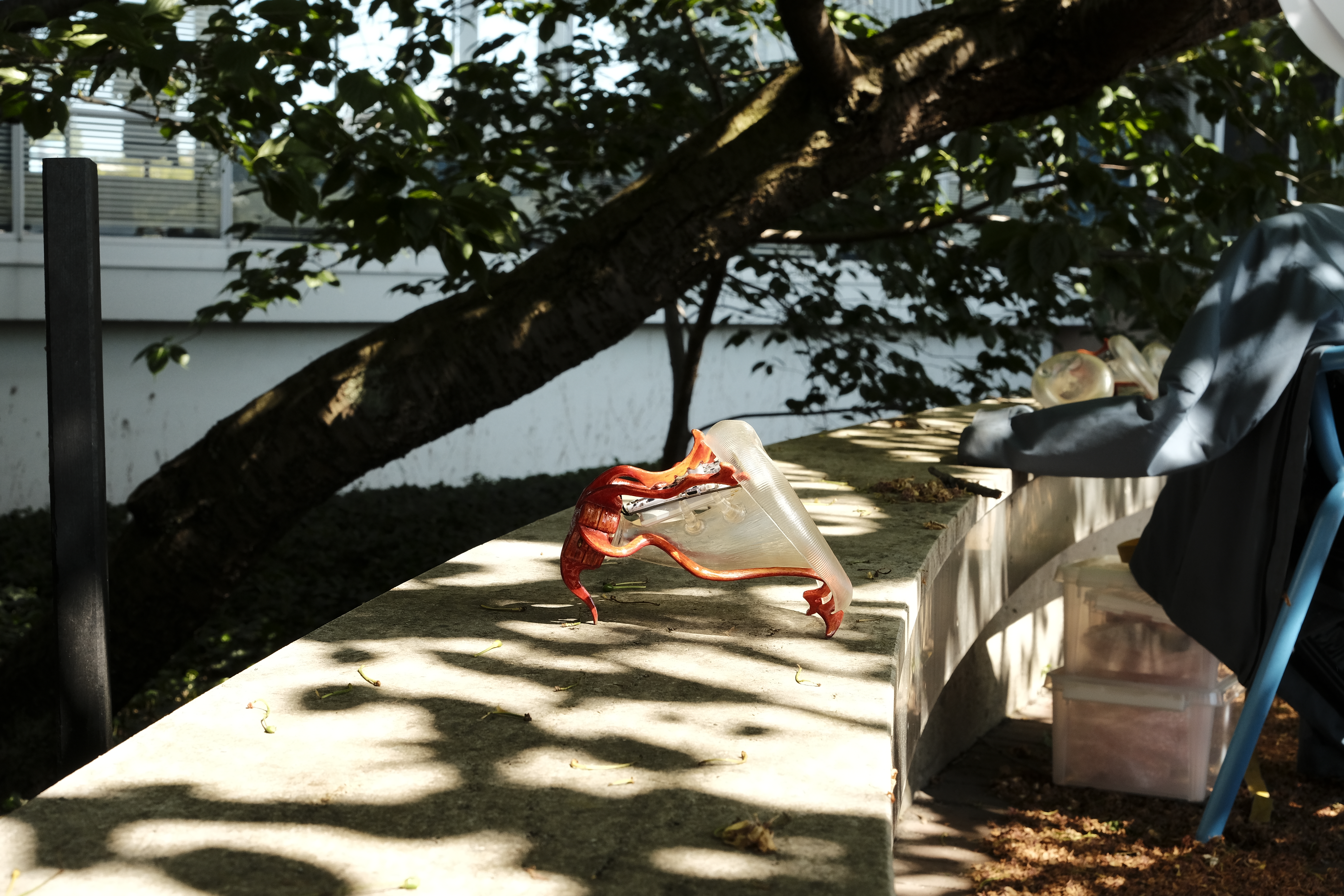
Following Jonathan, Matteo gave an introduction to his work and how he understand it to be situated at the intersection of art, life, and technology. He shared one of his most recent works, Chorusing Symbionts, in which an ensemble of artificial creatures communicate with each other and the environmental sounds (such as wind or bird sounds), creating a spatial sonic environment that invites listeners to pay attention to their surroundings.
In the afternoon, Bart Wernaart departed from the question of how we can co-design technology in a moral or ethical way. He reflected on topics such as care in relation to (online) data, data ethics to rethink the concept of human rights, and assigning human rights to non-human entities and the challenges to do this not just from a human-centred perspective.
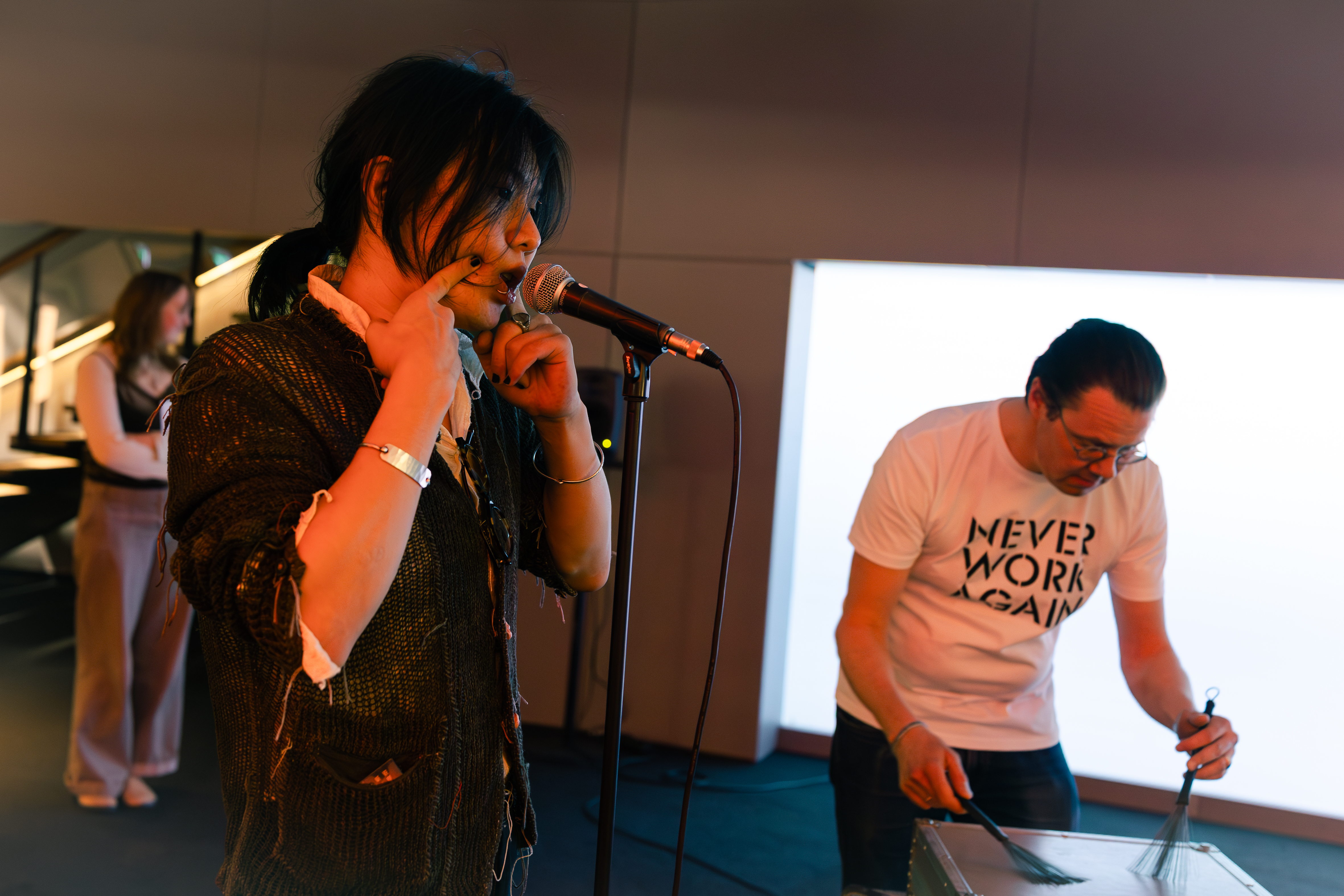
The day closed with a performance and talk by Jonas Howden Sjøvaag and Fontys master student Guangye Sun. Jonas and Guangye performed together with an AI instance programmed by Jonas, which they had prepared and experimented with during three days of workshops before the exchange moment.
A huge thank-you goes to Mieke Gerritzen, Robert Valentijn and the Next Nature crew for welcoming and hosting us, Ulla Havenga for organising and coordinating the whole day, and Rosalien Manderscheid for the documentation. And for everyone interested in following the project or getting to know more, the website on the Research Catalogue is live!
All photos taken by Lianda van Rossum.
- Circularity as a term is about relating differently to production, objects, time, knowledge, and to one another. Instead of constantly producing new things and discarding the old, circularity looks at how life cycles of materials can be prolongued: how we can reuse, share, repair, and care for what already exists. ↩


