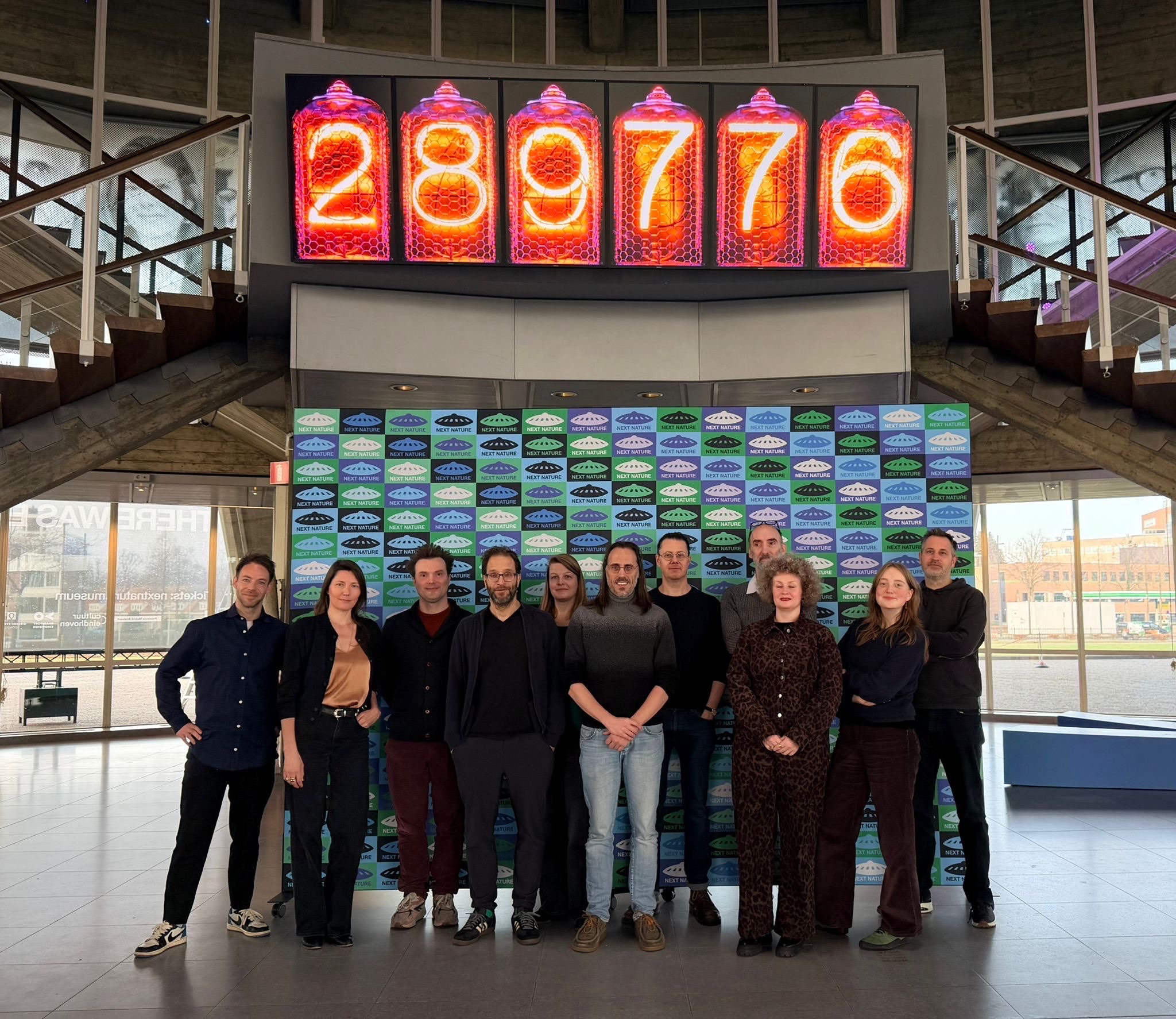
After the first months of preparation, last week was the day for the kick-off of “Towards Circular Communities”, a collaborative artistic research project in which our professorship Artistic Connective Practices is joining forces with Next Nature in Eindhoven, to investigate, through an artistic creation process and participatory exposition, how we as a society can grow towards a circular community. It was fantastic to meet with the entire team, to see the presentation of the participating artists and researchers and to experience the different perspectives and the richness of the project unfold.
Funded by the Nationaal Regieorgaan Praktijkgericht Onderzoek SIA programme Artistiek en Ontwerpend Onderzoek, in the coming 1,5 years we aim to explore how we can collectively imagine, shape, and approach circularity speculatively as a project of our society—as a community. This includes not only humans, but also animals, plants, and technology, particularly AI. The goal of the project is to visualise and speculatively design a circular community in which artificial intelligence is a sustainable component.
Five artist-researchers explore perspectives on circularity through an artistic research process. They are invited to create works that develop diverse viewpoints on the idea and title of the project, “Towards Circular Communities”. Three of the invited artists take part in the project from the start, while the last two will be chosen at a later stage; these three are:
Mandy den Elzen works at the intersection of art, biology, and science. She explores the plant and animal kingdoms. Through her series of works, she seeks to draw attention to a variety of characteristics that have emerged from biological processes and needs, and with an almost scientific approach she transforms natural materials into artistic works. Currently, Mandy is investigating the symbiotic relationship between humans and the plant kingdom, as well as the use of plant-based compounds.

Matteo Marangoni is an artist and community organiser with an interest in sonic rituals, DIY media, and applied utopianism. His artistic practice focuses on creating spatial experiences that explore the relationship between subject and object. He works with DIY electronics, digital systems, robotics, architectural spaces, people, and other life forms. Using these elements, he composes poetic rituals that engage nature and technology, materiality and transcendence, as well as the absurd, curiosity, invention, and contemplation. His current project, Chorusing Symbionts, explores the possibility of interspecies music that bridges the worlds of humans, robots, and animals, inspired by research in artificial intelligence and bioacoustics.
Jonas Howden Shøvaag is a musician and composer based in Oslo, Norway. He is currently a PhD researcher at the University of Agder. As an artistic researcher, his work focuses on understanding and exploring collaboration between humans and machines, primarily through the creation of diverse musical elements such as self-generating audio systems, digitised collaborative partners, and the philosophical dimensions connected to such intersections. Ensemble³, his current research project, investigates the boundaries of live improvisation and creates a musical experience shaped by human intuition and algorithmic sound generation from the “Drift Engine”—a generative music system built by Jonas himself.
Consortium
The artists are embedded in a consortium of Fontys and Next Nature, coordinated by Ulla Havenga (Fontys) and Robert Valentijn (Next Nature), in which they are informed, inspired, and challenged by specialists on moral design (Anika Kok), circular economy (Arthur Kok) and green AI (Bart Wernaart), from the Fontys professorships Transforming the Economy and Moral Design Strategy. The artists are furthermore supported by Wouter Heine-Hädicke and the Curiosity Café at Fontys Academy of the Arts, an innovative workshop with the aim of increasing the knowledge of technological possibilities within the arts. Wouter will focus on training an AI that aligns with the ideas, concepts, and values of the project.
The educational programmes Master in Arts Education (MKE), Visual Arts (DBKV) and the Master Performing Public Space (PPS) will also participate in the project, coordinated by Heleen de Hoon. For the ongoing documentation of the project, we are collaborating with the professorship Designing Journalism and Rosalien Manderscheid.
Outcomes
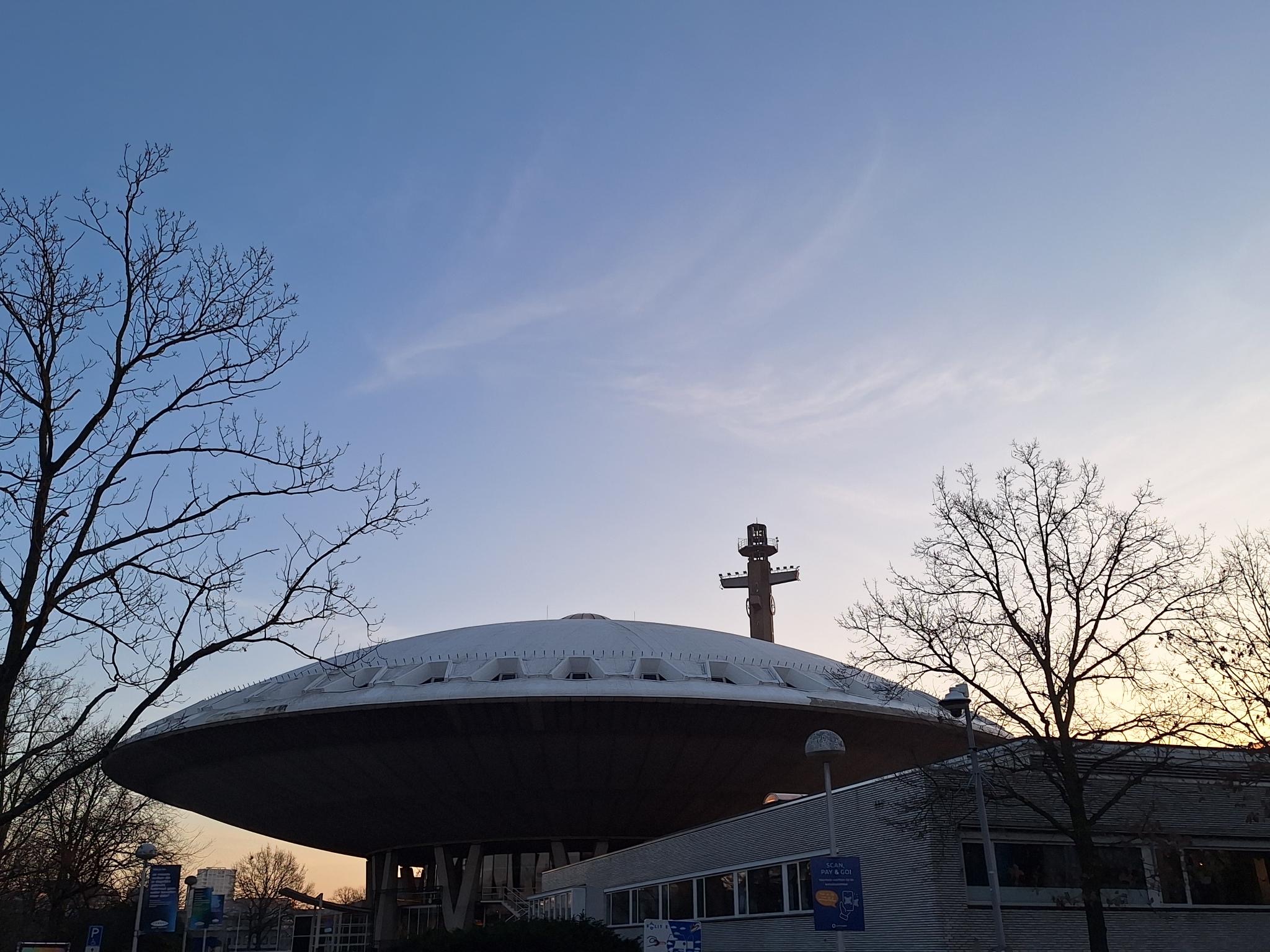
The artistic research and creation processes will culminate in an exhibition at the Next Nature Museum in Eindhoven. Here, we invite audiences to experience, reflect, and participate. We aim for an installation that offers perspectives on how we as a society, within our diverse communities, can move toward more circular ways of living and acting together. The iconic Evoluon becomes the setting for a speculative community of both the artists and the public. In this way, we invite visitors to take insights and ideas back to their communities about how to live circularly with one another.

 Falk Hübner