This is the last post of the season, right before (for many people already in) the summer break: About a small project that happened almost exactly a year ago — it’s never too late for an update. I was invited to conduct a residency at Kunstfort Vijfhuizen on 19-20 July 2024. My short stay was part of the larger residence project “As Found+”, by Sensory Threshold LAB 2024, initiated by two Hamburg-/The Hague-based artists Katherina Heil and Alexander Heil. The entire As Found+ project took place from 17.7–17.8.2024.
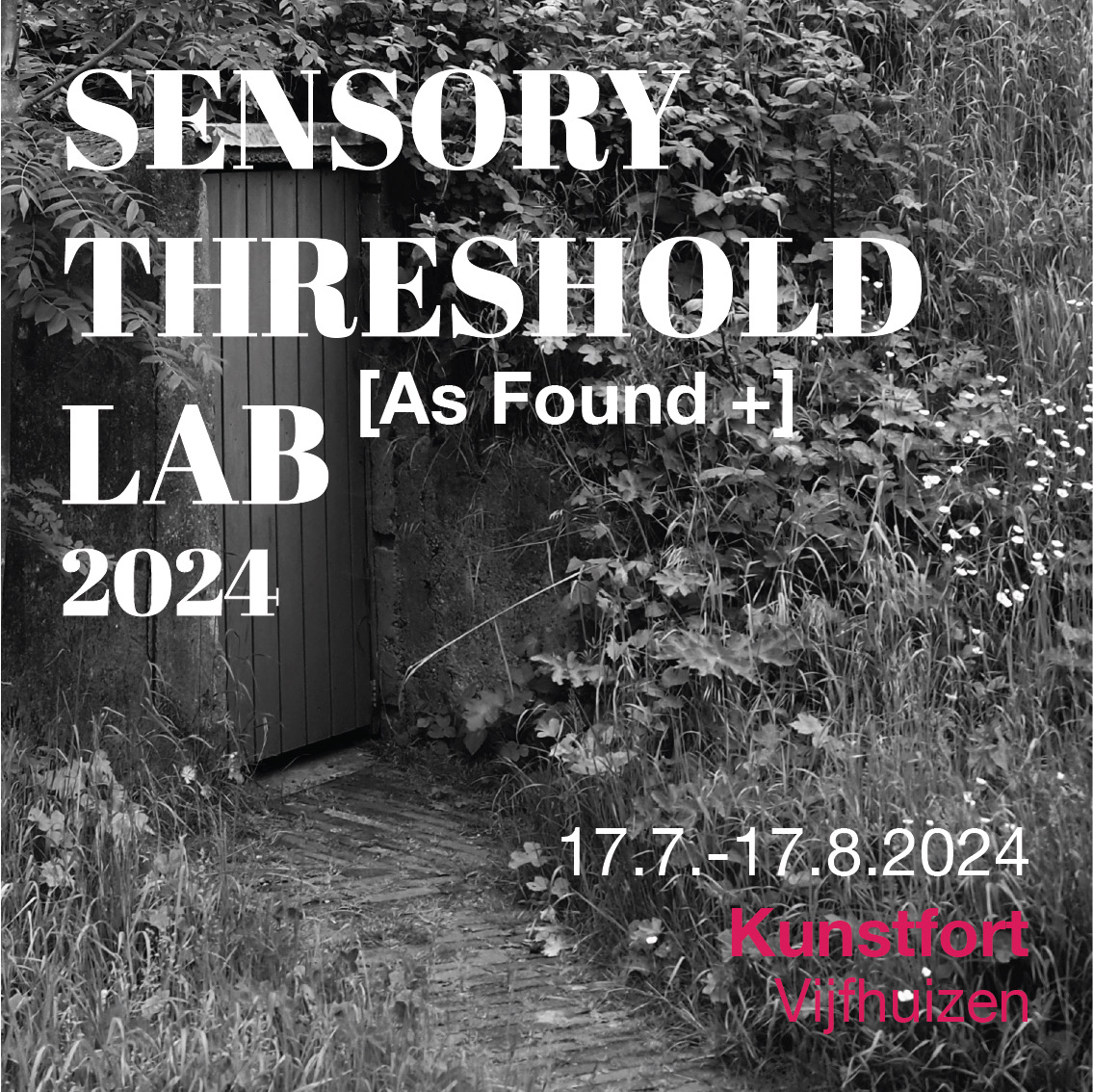
As Found+ was conceived as an immersive art lab that seeks to explore intersections between otherworldly environments, collaboration and the everyday. The idea was to create a unique festival-like experience where artists, researchers, and the community from the surrounding neighbourhoods come together to delve into the creation and interpretation of the fort and its surrounding landscape in diverse and unexpected ways. The lab emphasised the use of found materials, ready-made objects, and site-specific interventions to engage with the concept of micro places within a larger ecosystem.
After a few initial conversations with Katherina and Alex, we decided that I could use my exploration of (long distance) running in relation to artistic practice as a perfect topic for the residency. This idea built on my previous work on running in relation to artistic practice, e.g. in the project Running Tilburg, in which I used a number of places and stories to create a 53 kilometre-long route through the city, to get to know it and connect to it (see this publication on the Research Catalogue, created together with Heleen de Hoon). I have always experienced the collective, non-competitive element of running as one of its strongest aspects: Spending time together, often with people one barely knows except through running, while at the same time sharing personal stories and the often physically and emotionally intense experience of the long-distance running itself. My other fascination with running is the process of connecting with the environment by moving in and through it, literally by spending time on our feet in these environments (as during the Running Tilburg project).
The idea for the residency was to explore this work on running as connective practice further, and continue my inquiry into running in relation to, or meaningful for, artistic practice. Another idea was to approach this residency as co-creative, and to leave plenty of space for exploring associations and thoughts together as a group, welcoming ideas from the other participants to explore directions I haven’t previously thought about.
I planned various ways to document the residency and the different assignments and runs, including writing field notes, audio recordings, GPS maps, still and moving images during the runs, and thinking and reflecting together in conversations. Concerning the last point in particular, I was interested in which kinds of thoughts and ideas would emerge through running and the connected assignments. As a point of departure, I used two research questions:

DAY ONE
We started the first day by introducing the ideas and background to the group, especially the fascination of connecting to one’s surroundings by spending time on one’s feet, and literally connecting through the feet to the ground under oneself. After the introduction we went for our first run: An easy run to explore the terrain, area and close-by neighbourhood.


We took our time to pause and to playfully explore the surroundings, get into conversation about the experience, and spending some time in a small allotment garden close to the Fort.

I found it fascinating what happens when a group of artists runs together to explore, and has a conversation about this run afterwards. Several notions passed by, such as how one can actually run as an artist (Do artists run differently…?), how running might be used as a “tool” or as part of an artistic approach, or how through running the “creative engine” quite literally can be set to start running. The notions of social running and taking care for each other passed by as well, which are also important aspects of (ultra) trail running. One participant, visual artist Olga Masleinnikova, speculatively reflected on our running as a “habit of self-compassion, self-inquiry, and self-care.”
From there we went into the second run, a slow “emergence run”: We rain in pairs, slow enough to have an emergent conversation about the (fairly open) question: What do I need to understand or to do about my current situation? The assignment was to not plan a route or distance in advance, but rather let one’s feet, senses, and the environment guide the run — and the conversation:

After everybody had returned, the participants were invited, though not obliged, to share anything meaningful that had been exchanged. In the post-run-conversation and reflection, among other reflections, the group especially valued “getting lost in the run and the conversation” — meant in a very positive sense. All in all, I loved the overall atmosphere and form of the day, having two runs with each being followed by a long exploratory conversation and reflection; the day being finalised with showers, shopping, cooking, dinner, drinks, and campfire.
DAY TWO
It started to become really hot on the second day, so we decided to leave it with one last run to explore repetition. The “track” around the Fort itself was relatively short, which fitted this idea perfectly. We decided to run intervals in rounds around the Fort and document each round by recording our heartbeat with a contact microphone, as it was elevated from the effort and slowing down again.

Interestingly, this setup changed a few aspects compared to the day before: While the runs on the first day were very much concerned with openness, exploration, exchange and community, the work on repetition rather invited notions of training, limits and measuring — and more individual. We also realised that recording the heartbeat led to a more analytic way of reflecting; it felt as “outsourcing the experience”, while the runs on the day before were so much concerned with subjective, collective, and interactional perspectives. The microphone and recorder clearly became active actors in our reflections on the run and its rounds and intensities.

That afternoon, I left the Fort and the residency with plenty of ideas, notes, and reflections to explore my ideas further. While I realised that this work on “running artfully” (as it is called by the international research network with the same name) needs much more time to explore and to come to meaningful ideas, the residency was an important building block to develop these ideas further. Stay tuned for an upcoming research project, now in the works, that will explore colonialism and present-day racism through a methodology of site-specific artistic research and participatory running performances — more soon.
Have a wonderful summer!

 Falk Hübner