A quick throwback to this year’s ELIA Academy, now already more than a month ago! As mentioned in a previous post, the Academy took place in Évora, Portugal, a wonderful small city and UNESCO World Heritage Site. It was inspiring to spend time in this surrounding, with the ELIA community, and to experience the Portuguese hospitality. The programme was filled with lectures, workshops, interactive sessions and two keynotes, accompanied by great food and plenty of sunshine.
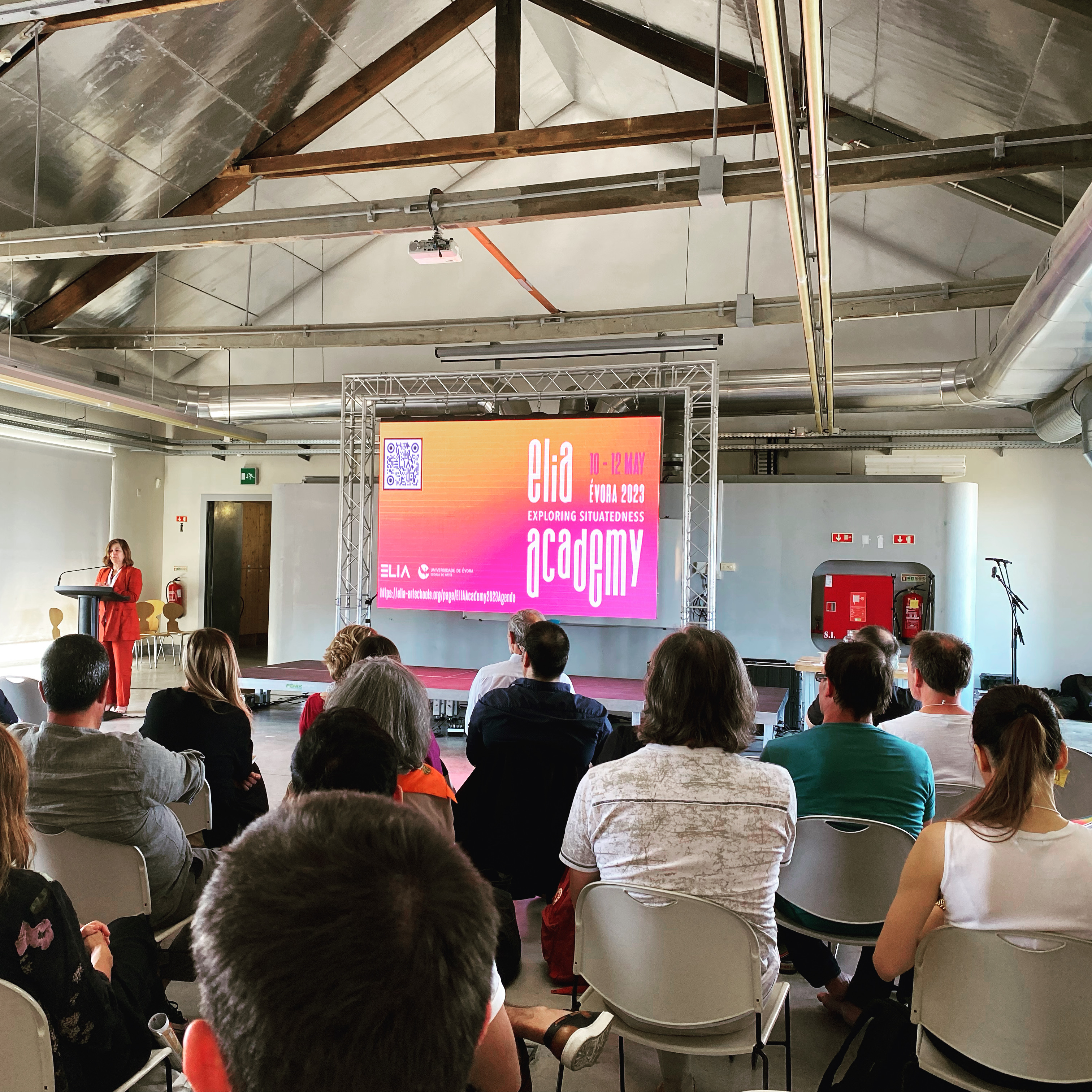
In the first keynote, dancer and choreographer Rui Horta explored the locally situated art and performance initiatives in the rather small town Montemor-o-Novo in Portugal. Horta studied, danced, and taught contemporary dance in New York, a city where he lived for ten years, having then returned to Portugal in 2000. He established a cross-disciplinary research and resident centre in Montemor-o-Novo, “O Espaço do Tempo”, in an old 16th-century monastery; today it is a main production art centre in his country.
Iryna Cherniaieva, vice-rector for education and international relations of the Odesa National Academy of Music, delivered the second keynote. She provided some insight into how higher music education in Ukraine continues during times of war, including intriguing and touching images and video excerpts from students who shared their experiences and hopes. The resilience with which students and staff continued to work (including rehearsing with candlelight due to the absence of electricity) was both astonishing and disturbing. I realised how difficult it is for me as a person living in a country at peace, to imagine how daily life in times of war actually looks like.

Other inspiring sessions included Thor Magnus Tangerås’ presentation “Experiencing Connectedness to Nature through Attending to Strangeness”, part of the “More than human” breakout session. Tangerås’ work engages with the highly controversial topic of windmills (building such windmills and the policy related to them is subject to very controversial discussions in The Netherlands, too), but approaches it from an entirely poetic perspective: Through writing poems based on well-known canonic poetry works, essentially exchanging nouns with the term “windmill(s)”, Tangerås created a non-political, non-judgmental and rather imaginary and absurdistic entrance into the topic. This makes entire different and less polarised discussions possible, which is hugely inspiring.
The last day started with the early morning session “Running Artfully” by Veronique Chance. Chance took us on a slow running journey through Évora, along the historical city walls, to explore running as a participatory, inclusive and pedagogical and potentially artistic practice. She aligns this work to performance art practices in the ways in which the limits of the body are tested through the physical demands of long-distance running, while the limits of technology are also challenged through the ways in which she communicates that experience to others.

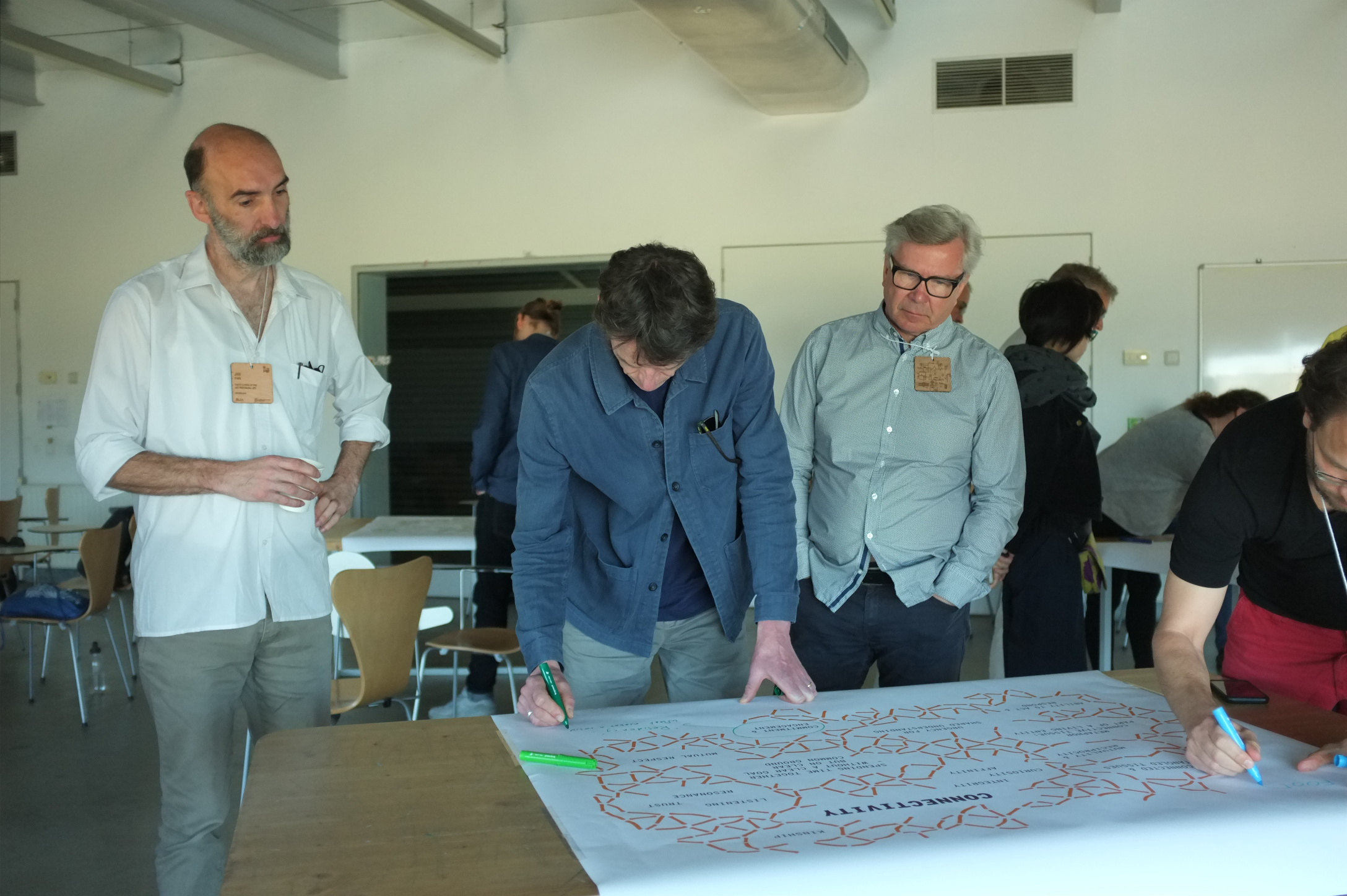
Directly after the running session, I headed towards my own presentation and workshop, which was part of the “Careers in the Arts” session. My idea was to introduce the participants to the concept of our professorship, artistic connectivity, and explore it through the notion of situatedness, with our projects of socially engaged artistic research residencies (such as local communities or care homes) as practice cases. We used large printed versions of our conceptual clouds (artistic, connectivity, and practice, in the wonderful design by Siel Damen) to explore, annotate, and discuss (more on the creation process of the clouds’ visualisation will come in a future post). The presentation sparked an interesting discussion on how such residencies might find their way into higher arts education and thus the work of students.


 Falk Hübner
2 Comments